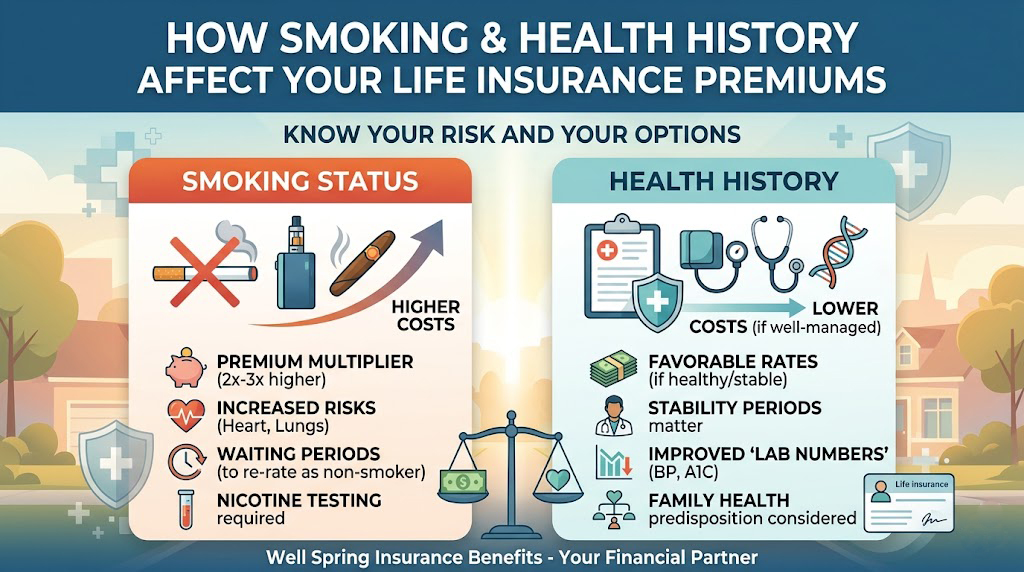
A common myth among seniors is that a history of health issues—like diabetes, high blood pressure, or heart disease—automatically disqualifies you from life insurance.
In reality, most seniors in Maryland and across the U.S. can still secure reliable coverage. At Wellspring Insurance Benefits, we specialize in finding plans for those who have been told “no” elsewhere. Here is how the qualification process works when you have a pre-existing condition.
Table of Contents
Understanding “Underwriting”: How Insurers View Your Health
When you apply for insurance, companies use a process called “underwriting” to determine your risk. Depending on your health, you will generally fall into one of three application categories:
- Level Coverage (Immediate Benefit): For those with well-managed conditions (e.g., controlled high blood pressure). You are covered from day one.
- Graded/Modified Coverage: For those with more recent or serious health events. The payout may be limited during the first 2–3 years but grows to full value afterward.
- Guaranteed Issue: No health questions asked. This is a “safety net” for those with severe terminal illnesses or significant chronic complications.
Common Pre-Existing Conditions & Qualification
| Condition | Likely Qualification Path | What Insurers Look For |
| Diabetes (Type 2) | Final Expense Insurance | Age of diagnosis and A1C levels. |
| High Blood Pressure | Level (Day 1) Coverage | Stability with medication for 6–12 months. |
| Heart Stents/Bypass | Graded or Level (after 2 years) | How much time has passed since the procedure. |
| COPD / Asthma | Memorial Estate Planning | Oxygen use and frequency of hospital visits. |
| Cancer History | Level (if 2–5 years cancer-free) | Type of cancer and date of last treatment. |
Strategies to Qualify Successfully
1. Opt for “Simplified Issue” Plans
Skip the needles and the medical exams. Many of our plans at Wellspring use Simplified Underwriting, which involves a short phone interview or a few health questions rather than a physical check-up.
2. Be Honest About Medications
Insurers often check a “Pharmacy Report” rather than calling your doctor. Being upfront about your prescriptions for Cremation or Burial insurance helps us match you with the right carrier immediately.
3. Focus on “Stability.”
Insurers love the word “stable.” If your medication hasn’t changed in the last two years and you haven’t been hospitalized, you are much more likely to qualify for lower-cost, immediate-payout plans.
FAQ‘s
Can I get insurance if I’m currently in a nursing home?
Most standard plans require you to be living independently or in assisted living. However, we offer specific Memorial Estate Planning resources to help families manage costs even in late-stage care.
What if I was declined by a big-name carrier?
Large “Term Life” companies are very strict. Smaller Final Expense carriers specialize in senior health and are often much more lenient with conditions like obesity, diabetes, or depression.
How do I know which plan is best for my specific illness?
Every carrier “rates” illnesses differently. For example, Company A might hate heart issues but be okay with diabetes, while Company B is the opposite. As an independent agency, we shop across multiple carriers to find the one that views your specific health history most favorably.
Get Protected, Regardless of Your Health History
Your health shouldn’t prevent you from protecting your family’s future. Whether you have a minor condition or a complex medical history, we can help you find a plan that fits.